
Asphalt Paving for Helena, Boulder and Butte Properties
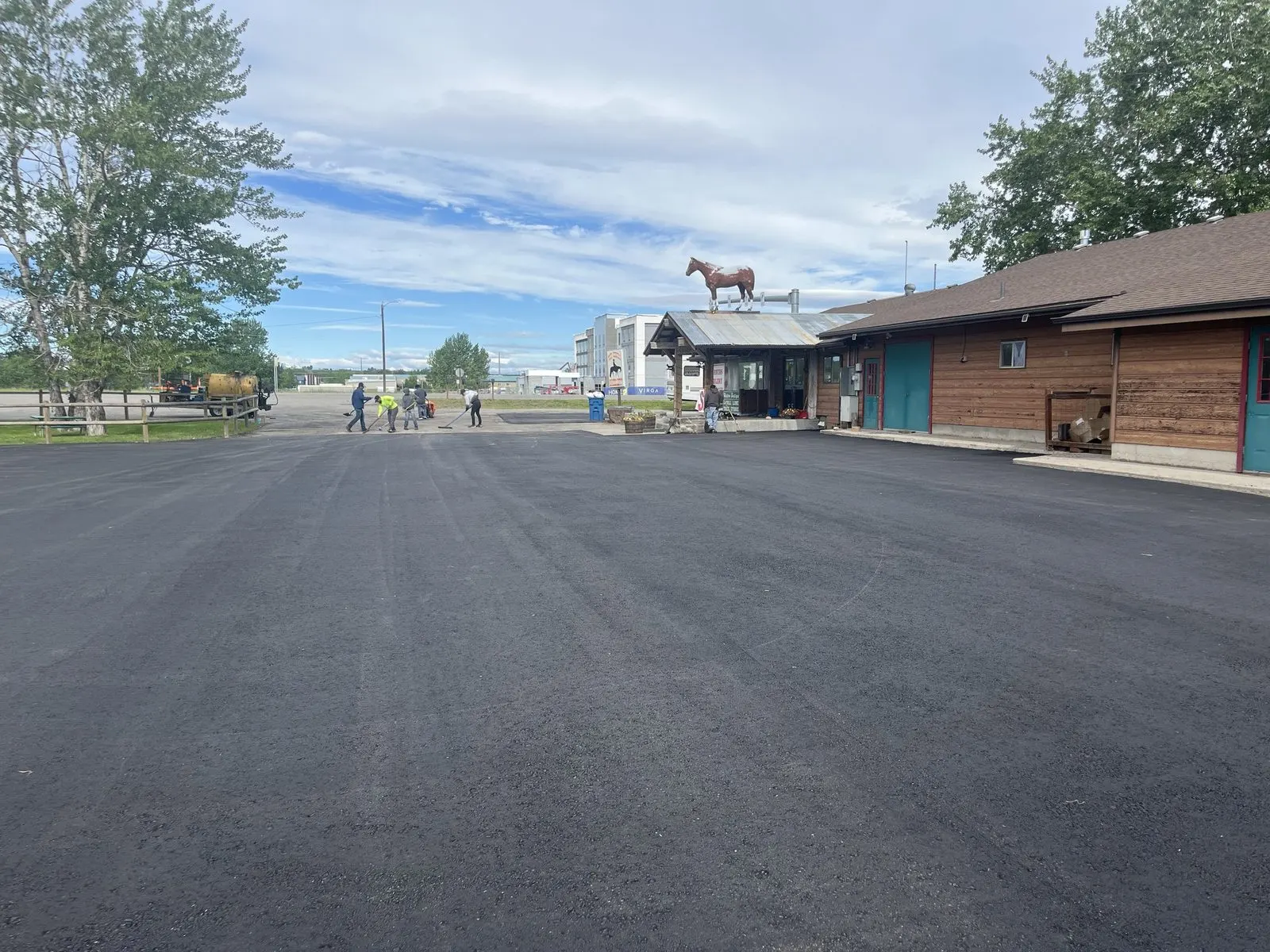
Asphalt paving in Boulder, Montana starts with matching the service to how you use the surface. A home driveway, a residential property with several paved areas and a commercial lot each call for a different plan. We pave across Helena, Boulder, Butte and the towns around them, and the first step is always a site review and a Free Estimate.
Which asphalt paving service fits your property
The right service depends on the load the pavement carries and how often it carries it. A driveway sees cars and the occasional delivery truck. A business lot sees constant turning, delivery trucks and sometimes snow removal equipment. That difference drives how the base (the compacted stone layer under the asphalt) and the asphalt thickness are planned.
| Service | Typical use | What to settle first |
|---|---|---|
| Driveway paving | Daily vehicles, a single entry to the street | Length, width, slope and where water runs |
| Residential asphalt paving | Driveways plus turnarounds, pads or walkways | Which areas get paved and how they connect |
| Commercial asphalt paving | Customer parking, delivery and truck traffic | Traffic loads, access during work and layout |
What to clarify about the paved area
Know what will drive on it. If a loaded truck, a trailer or an RV will cross the surface regularly, say so. Heavier use can change the base and the asphalt the crew recommends.
Also settle whether the job is new ground or a replacement of worn pavement. Replacement may mean milling or removing the old surface, while new ground starts with grading and a fresh base.
What a paving site review should cover
A good site review is a walk of the whole area, not a quick look from the street. The goal is to see why the surface looks the way it does today so the new one does not repeat the problem.
- Existing surface: cracking, sunken spots, potholes and edges that have crumbled.
- Base beneath it: soft or pumping areas often point to a base that has failed, and paving over them without fixing the base usually shows the problem again.
- Drainage: where water sheds, where it pools and where it goes after it leaves the pavement.
- Edges: asphalt needs support at the sides, and unsupported edges tend to break down first.
- Access: gate widths, overhead lines, tight turns and where equipment and trucks can stage.
These details shape the work plan and the order of the work. A site with poor drainage may need regrading before any asphalt goes down, and a lot that stays open for business may need to be paved in sections.
How Montana weather affects paving plans
Water does most of the damage to pavement in Montana. Snowmelt and rain slip into cracks, freeze on cold nights and push the surface apart a little more each time. That repeated freezing and thawing is hard on a weak base and on open cracks, so drainage gets as much attention as the asphalt itself. Properties around Helena and Butte, like much of the state, can expect cold nights to show up before winter proper, so the paving window may close earlier than people plan for.
Asphalt is laid hot, and the ground and air need to be warm enough for the crew to place and compact it before it cools. November to December weather can narrow that window, and a stretch of wet or freezing days can push a job back. If your project is close to the end of the paving season, the real question is the quality of the finished work, not just whether the crew can get it down.
When you talk to us, ask how site and weather conditions on the day will affect the schedule. If conditions are not right, waiting for a good window is usually better than paving into the cold. Some properties are better planned for the following warm months, with repairs or drainage fixes sorted out ahead of time.
Local conditions you can check yourself
- If your yard or lot holds water after snowmelt, tell us where.
- If your drive climbs to the street or runs along a slope, note where runoff leaves it.
- If your soil is clay, mention it, because clay tends to hold moisture and can soften a base.
- If plows push snow onto one edge every winter, that edge deserves a look.
What to prepare before requesting an estimate
You do not need drawings. A few notes make the site review faster and the estimate more accurate.
- Describe the area you want paved, including rough length and width, or mark it with stakes or flags.
- Write down drainage or access concerns, such as standing water, tight turns or limited room for trucks.
- Say how you use the surface and what drives on it, including any heavy vehicles.
- Tell us your timing, and whether work needs to happen around business hours or a move.
- Note anything that must stay in place, like landscaping, a mailbox, a fence or a utility box.
Call us at (406) 922-9223 and ask for a site review and a Free Estimate. We will look at the surface, the base and the water, and tell you what the site needs.
Common questions
Do you do asphalt paving in Boulder, MT?
Yes. We handle driveway, residential and commercial asphalt paving in Boulder, Helena and Butte, along with nearby Montana towns. Start with a site review and a Free Estimate.
Is driveway paving different from commercial asphalt paving?
Yes, mainly in the base and thickness the traffic calls for. A commercial lot usually faces heavier and more frequent loads, so it gets planned differently from a home driveway.
What should I have ready for a paving estimate in Helena or Butte?
Know the rough size of the area, where water collects and how vehicles reach it. Notes on timing and anything that must stay in place help too.
Areas we serve
Our services
Have a question about your project? Call (406) 922-9223