
Fall Cleanup for Asphalt Driveways in Montana
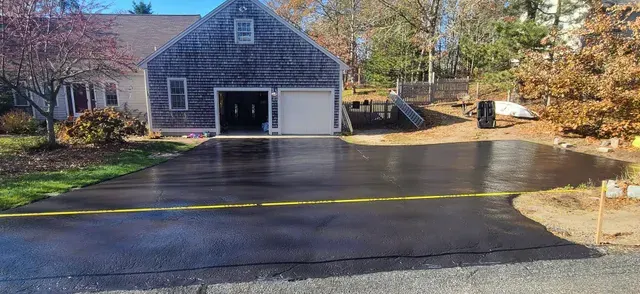
Fall asphalt driveway maintenance in Montana starts with getting leaves, dirt and grit off the surface before snow lands on top of them. Sweep or blow the drive clear, rinse stuck-on dirt gently, let it dry, then look over what is left. That last look matters most, because cleaning shows you the condition of the pavement but does not change it.
Why leaves matter before Montana winter
A layer of wet leaves acts like a damp blanket. It keeps moisture pressed against the asphalt, and as the leaves break down they leave dirt and grit behind that holds water even longer. Water that sits on the surface can find its way into small cracks.
That is where Montana winters do their work. Snow, melt and refreeze create freeze-thaw cycles: water seeps into a crack, freezes, expands and pries the crack wider. Clearing debris before the first real snow lets you see those cracks and keeps the surface from staying wet under a pile of mulch.
Timing is worth planning around. October and November weather can shift toward winter conditions across the state, sometimes quickly. A dry afternoon in September or early October may be a better window than waiting for the first storm to force the job.
Clear the driveway without damaging it
For routine debris cleanup, a stiff push broom, a leaf blower and a garden hose are often sufficient.
- Remove the bulk first. Sweep or blow leaves, pine needles, loose dirt and small sticks off the drive. Work toward the edges, then clear the edges themselves, since debris collects where the asphalt meets lawn or gravel.
- Rinse stuck-on dirt. Use a hose with a normal spray and a soft brush if needed. Keep the water pressure modest.
- Let it dry. Let the surface dry before judging its color and texture.
- Check drainage spots. Look at where water runs off, near downspouts, and along the low side of the drive. Clear anything blocking that flow.
What to keep off the surface
Skip metal scrapers and shovel blades dragged across the asphalt, since they can gouge it. Avoid harsh solvents, gasoline and degreasers on stains. Asphalt is held together by binder, the oil-based glue that coats the stone, and strong solvents can soften it. A narrow, high-pressure washer tip can also scar the surface and strip binder, so if you use a pressure washer at all, keep it gentle and keep your distance.
Know when cleaning is not enough
Once the debris is gone, some problems will still be there. That is normal. A broom does not fix a worn surface, and a hose does not close a crack.
| What you see | Will cleaning help? | Next step |
|---|---|---|
| Leaves, needles, loose dirt | Yes | Sweep or blow, then rinse |
| Stuck-on dirt or leaf stains | Often, with a gentle rinse | Let it dry and recheck |
| Oil or fuel marks | Usually only partly | Note them and ask a contractor |
| Faded, gray, rough-looking surface | No | Ask whether the surface suits a sealcoat |
| Cracks, potholes, sunken areas | No | Get the area looked at before winter |
Keep cleaning and sealcoating separate in your mind. Sealcoating is a surface treatment applied over sound asphalt, not a cleaner, and it works on a clean, dry, reasonably intact drive. If your driveway is faded but solid, driveway sealcoating may be worth asking about. If the surface is breaking up, has widespread cracking or holds water in low spots, the question may be repair or driveway paving instead. A contractor may be able to help assess which applies after walking the drive.
How Montana conditions change the routine
Montana winters bring snow and freeze-thaw cycles, and storms can arrive in October and November, so most homeowners should plan to finish cleanup before then. Elevation and exposure vary a lot across the state, so your own yard sets the pace more than the calendar does.
If you are in Bozeman, Belgrade or Three Forks, check a few conditions on your own property:
- Trees over the drive may keep dropping leaves, so more than one pass may be needed.
- A drive that slopes toward the garage needs clear drainage paths before snow melt starts.
- If your yard is clay, water can hang near the edges, so look closely at the border of the pavement.
- Where plows push snow or a berm builds up along the edge, check that spot for crumbling.
Set a simple cleanup routine
Clear leaves before they mat down or get buried by snow. Once a good dry day comes in fall, do a full sweep, a gentle rinse and a walk-around.
- Clear leaves in more than one pass if trees are still dropping them.
- After the surface dries, note any stains, cracks or worn spots that remain.
- Write down or photograph those spots so you can describe them to a contractor.
- Ask whether those areas call for sealcoating, repair or paving work.
If you want a second opinion on what the cleaned-off surface is telling you, we offer a Free Estimate on driveway work. Bring your list of spots to discuss when requesting an estimate.
Common questions
How do I clean an asphalt driveway before winter?
Sweep or blow off loose debris, rinse with a hose at normal pressure, and let the surface dry fully. Then walk the drive and note stains, cracks or worn areas that cleaning did not fix.
How do I remove leaves from an asphalt driveway?
A leaf blower or stiff push broom can help remove leaves. Clear them before rain or snow packs them down, since wet leaves can stain the surface and stay damp for days.
Can I use a pressure washer on my asphalt driveway?
It is safer to stay with a garden hose. A narrow or high-pressure tip can scar the surface and strip binder, the oily glue that holds the stone together.
Areas we serve
Our services
Have a question about your project? Call (406) 922-9223